
https://www.nytimes.com/2025/12/08/business/japan-rare-earths-lynas.html
Highlights:
As the United States and other nations scramble to secure rare earths outside China and build up their domestic supplies, Japan’s experience provides lessons in how it can be done…For Japan, this painful lesson came 15 years ago.
In September 2010, a collision near disputed islands between a Chinese fishing trawler and two Japanese Coast Guard vessels escalated into a diplomatic and economic crisis. Japan detained the captain of the Chinese ship, and Beijing, in retaliation, implemented an unannounced, two-month embargo on rare-earth exports. At first, the significance of China’s move was lost on some Japanese officials… but soon it became clear it could put Japan’s automated industry at a standstill.
Mr. Terazawa was responsible for developing the trade ministry’s next suite of economic policies. He compiled a package, worth a little over $1 billion at the time, aimed at reducing Japan’s supply chain vulnerability to rare earths. It included substantial support for Japanese groups to diversify rare-earth sources.
The Australian company Lynas was trying to create the world’s first integrated rare-earths supply chain without using China, instead mining the ores in Australia and refining them in Malaysia. But it was struggling to amass the capital it needed to increase production at its Malaysian refining site. It was provided by the Japanese conglomerate Sojitz.
Japan has significantly bolstered its supply chain resilience. While industry estimates placed Japanese rare-earth imports from China at 90 percent or more during the 2010 trade dispute, that figure now stands closer to 60 percent to 70 percent.
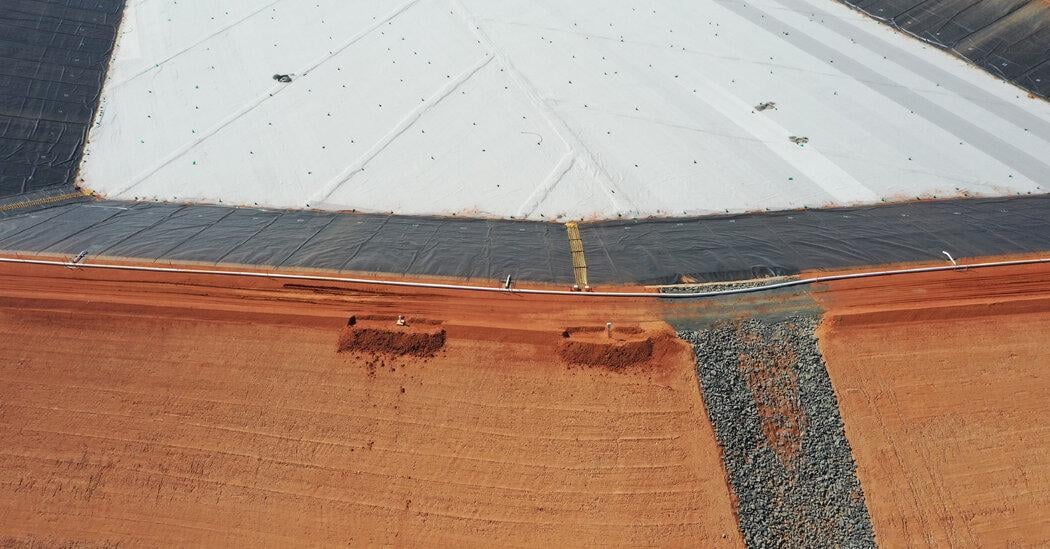
Between 2011 and 2012, the Lynas facility in Malaysia faced months of delays because of fierce local opposition and legal challenges. The facility began operating only after it revised its residue management plan multiple times.
In contrast, Chinese processing factories are often lightly regulated, and some illegally operated, creating toxic waste sites. As a result, Mr. Uemura said, Sojitz and Lynas have higher costs than Chinese rivals and require public backing.
William Pesek, a Tokyo-based contributor at the consulting firm Yardeni Research, said Japan’s efforts since 2010 illustrated how China’s current export threats might ultimately backfire by compelling nations to lessen their dependency on its rare earths. He pointed to Japan as an example. China lifted the 2010 export controls on Japan within a few months, but Japan continued to diversify its supply lines. Export threats “are a hard bell to unring because they become a trust issue,” Mr. Pesek said.
For officials in Japan, the current situation presents an opportunity to band together with other countries to solve the issue of cost — one that, over the past 15 years, Japan has struggled to tackle on its own.
If nations agree to buy more non-Chinese rare-earth materials, they can build scale and eventually bring down costs, according to Mr. Kobayashi, the trade ministry official. More coordination can also mean creating deeper ties between Japan, which has experience building mine-to-magnet supply chains, and countries willing to host and fund processing facilities.
by jjrs