
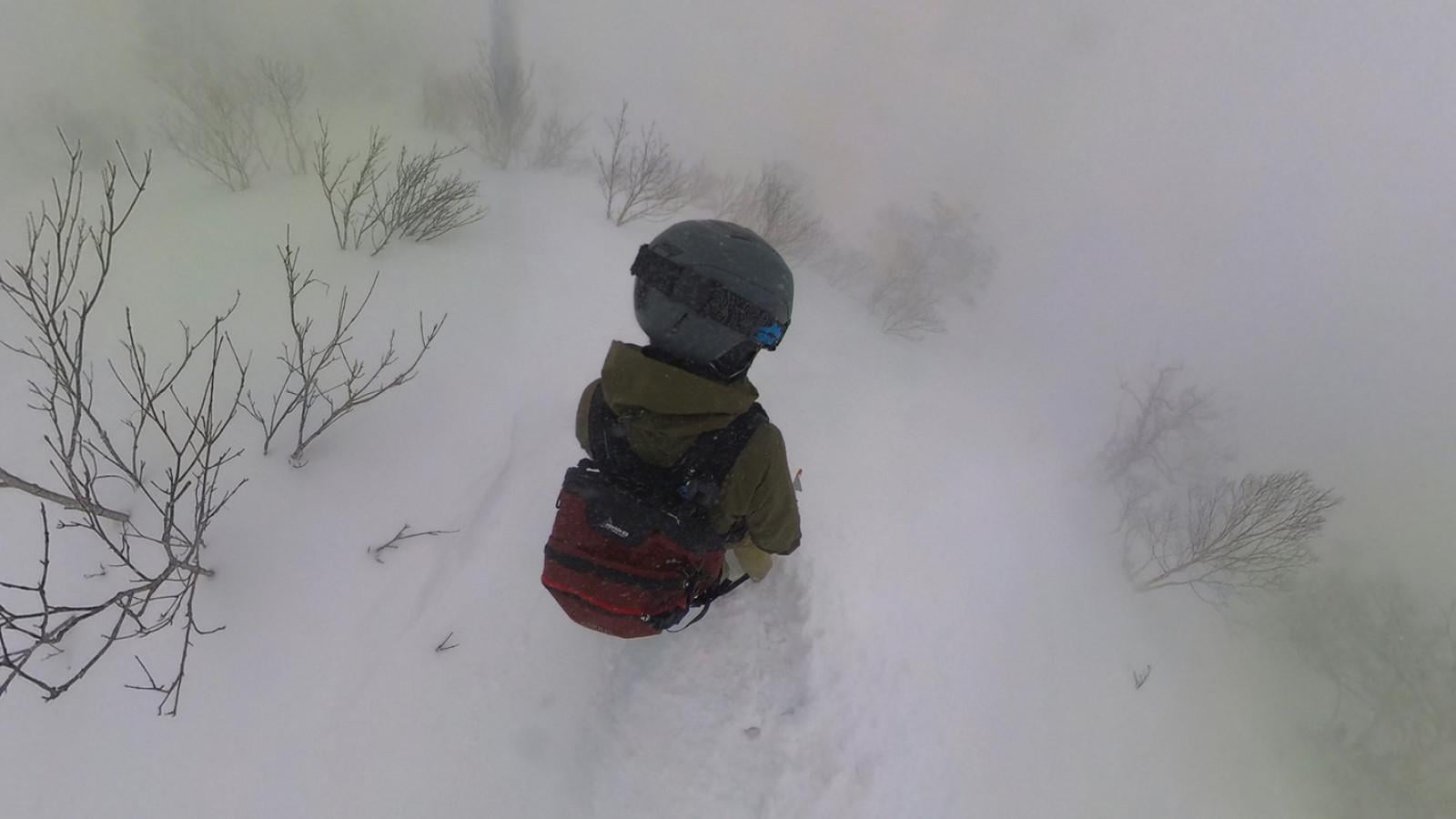
The number of accidents involving foreigners getting lost while skiing in the backcountry has been increasing, and these incidents are now frequently covered in the news. Once you step outside the managed areas of a ski resort, you are in unmanaged winter mountain areas, and you are basically responsible for your own safety. However, there has been a noticeable increase in cases where foreigners, lacking this awareness, carelessly enter winter mountains for reasons such as "I didn't know" or "there were tracks," only to become stranded and have to call for rescue.
Currently, many ski resorts have installed signs in multiple languages throughout the facilities indicating the boundaries between managed and unmanaged areas, and have also placed signs at points leading to unmanaged areas stating that "unmanaged areas are at your own risk." Even so, there are still foreigners who say they "didn't know."
The costs of rescue operations at these ski resorts are borne by the person being rescued or the person requesting the rescue. The amount varies depending on the ski resort, but for example, one ski resort has a basic fee of 200,000 yen (for up to 2 hours), and thereafter it is 20,000 yen per hour per search team member, 10,000 yen per hour per snowmobile, and 50,000 yen per hour per snowmobile. If a rescue operation takes about 4 hours, the cost will range from 400,000 yen to over 1,000,000 yen depending on the number of people involved. Usually, the costs are explained to the parties involved in advance and billed at the scene. Of course, it is more likely that people will not have large amounts of cash on hand, so payment is usually made by credit card or other means.
Therefore, saying that "search and rescue costs are free" is not entirely accurate. While official rescues by the police and fire department are free (with some exceptions), in winter mountain accidents, private companies such as ski resorts and mountain lodges that are open for business overwhelmingly cooperate, and in most cases, high costs are charged to the rescuers and those requesting rescue. An acquaintance of mine got lost in the back country near a ski resort and died. He was not found immediately and was only discovered in the spring after the snow melted. He had gone into the mountains alone, and the accident was discovered because his car was left at the ski resort, but even after a week of searching, he was not found and the search was temporarily abandoned. Of course, the search was stopped out of consideration for the burden on those involved, but the cost of the search was also one of the reasons for the decision to stop. There has long been a saying that "if you get lost in the mountains, your house will be destroyed," and that remains true even today in snowy mountains.
by MagazineKey4532