
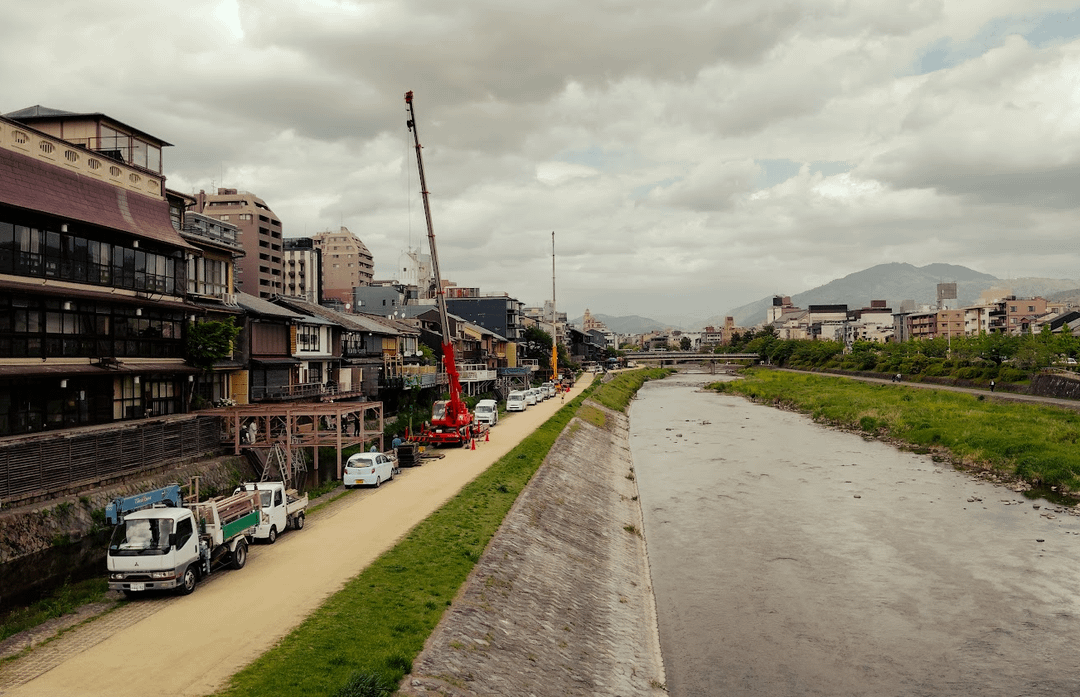
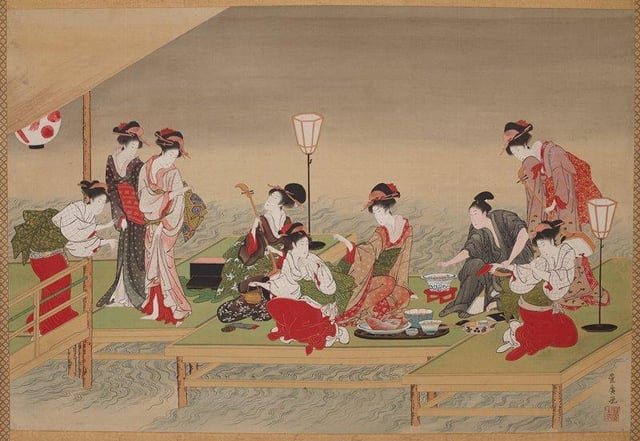
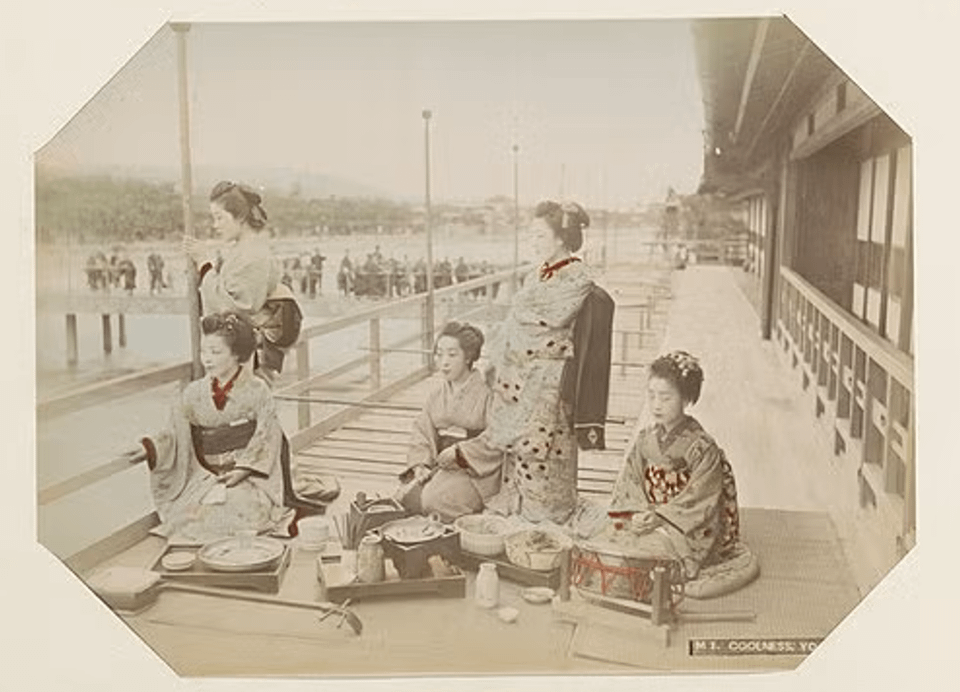
On Monday a passerby asked about all the cranes along the Kamo River erecting platforms. One of the famous features of Kyoto is the summertime “Nouryou Yuka” verandas at restaurants and bars along the Kamo River. There is nothing particularly ornate about most of the wooden platforms, and it IS still hot out there despite the breeze, but there is something civilized and refined about dining on the yuka.
The yuka are erected at the end of April in anticipation of the opening of Yuka Dining on May 1, and they come down at the end of September and are stored away for the next year. There are about 100 of them, and their use is governed by the rules of Kamogawa Noryou-Yuka Association.
Interrupted only by war, natural disasters and the recent pandemic, Kyoto-ites have maintained this seasonal tradition so that residents and visitors can still enjoy this atmosphere of beauty in the otherwise stifling heat and humidity of summer in Kyoto.
It began the early to mid 1600s, when a culture of bawdy dance entertainment flourished along the banks of the Kamo River, called the Kamogawara area. The river was not excavated at that time, nor were there any levees, so flooding was common. Therefore, the riverside was a kind of slum area. People who lived there were called "kawaramono", not a compliment.
- 1688-1703 Low Yuka platforms like decks or boardwalks first appeared.
- 1703 A huge fire called Rakuchu Taika ravaged Kyoto, leading to a temporary decline in the culture of Kyoto during recovery.
- 1751-1763 Having recovered from the big fire, the Shijogawara area became lively again, and this era is considered one of its high points.
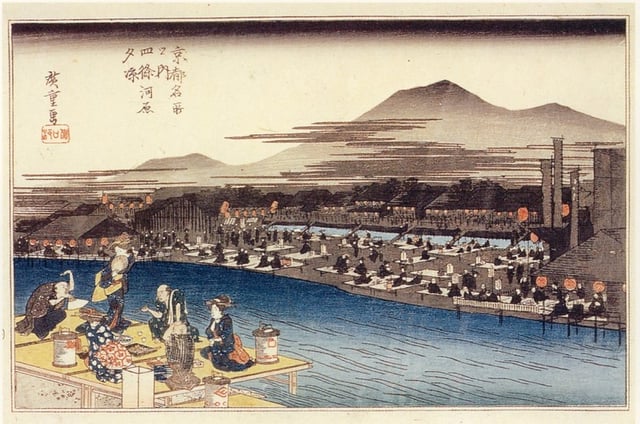
- 1771-1780 Painter Okyo Maruyama created some well known works depicting the yuka.
- Meiji Era A custom of erecting the yuka from July until August became established.
- 1877 Low yuka platforms were built on the eastern banks of the Kamo south of Shijo bridge.
- 1892 Elevated yuka verandas began to appear around Shijo bridge.
- 1923 Rules for yuka construction were established following complaints about roofs and iron support poles.
- 1934 Tyhoon Muroto hit Kyoto and 3000 people died.
- 1935 A severe flood hit Kyoto and all the yuka were washed away.
- 1942 During World War 2, lighting was restricted and erecting yuka was prohibited.
- 1951 Erecting yuka resumed following the end of U.S. occupation.
by KyotoGaijin