
Highlights:
When you’re using Live Translation, your responses appear on your phone screen in the translated language, and you can have the phone read them out loud through the speaker. I sometimes took advantage of this functional, but awkward, arrangement.
But locals in Tokyo’s parks, museums and countless small, quiet cocktail bars seemed quite receptive to speaking into my iPhone and reading my responses on the screen. (In noisy environments, holding my iPhone close to the subject helped.)
Under optimal conditions — one-on-one conversations in quiet settings — the system performed well and felt natural and almost effortless. Listening was easier than speaking, which required the other party to read or listen to my translated responses.
The technology didn’t perform quite as admirably at bustling train stations or in lively izakayas, for instance, or during exchanges with rapid-fire speakers.
Live Translation worked well during a sushi-making class and seafood tour of Tokyo’s crowded Tsukiji Outer Market. My guide, Sota Nakamura, who is also a sushi chef, noticed minor mistakes relating to seafood and sushi preparation, as well as a few incorrect pronouns.
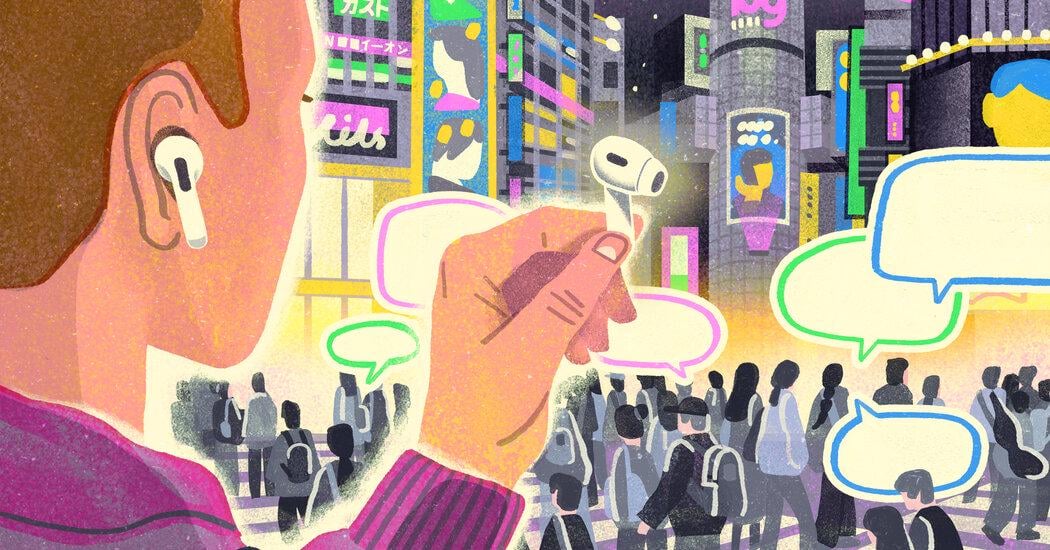
When I used the technology at a huge, outdoor ramen festival, I had the sensation of eavesdropping because the earbuds picked up conversations among bystanders who may have assumed I couldn’t understand what they were saying. Other times, as when I was photographing fashionable shoppers in upscale Ginza, I missed the challenge and reward of trying to communicate with people directly in their language, and it felt a bit like cheating.
by jjrs