
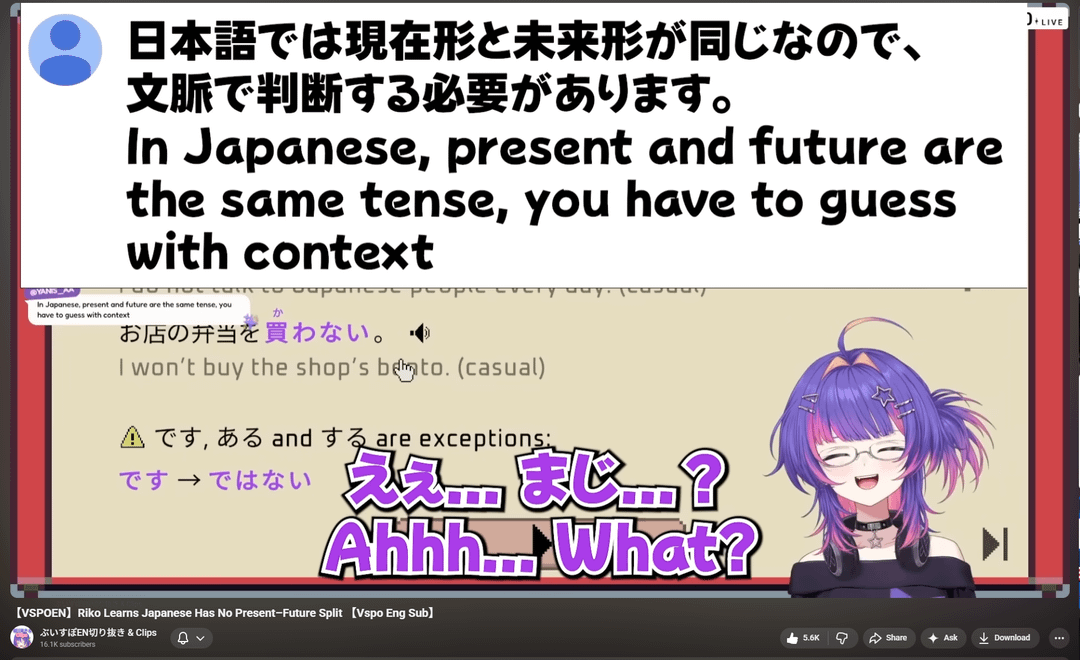
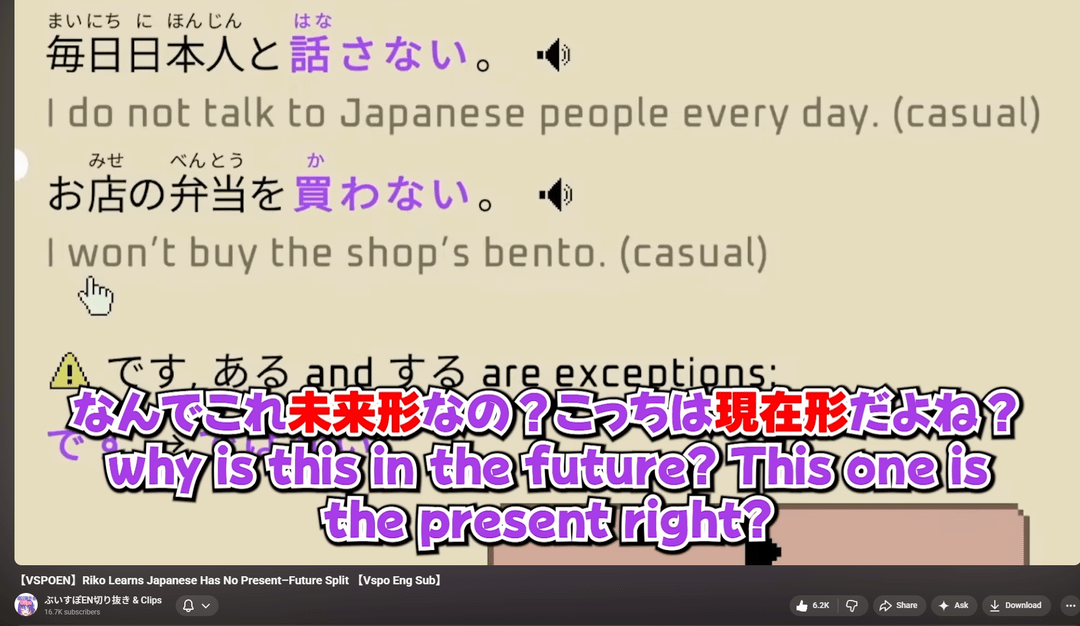
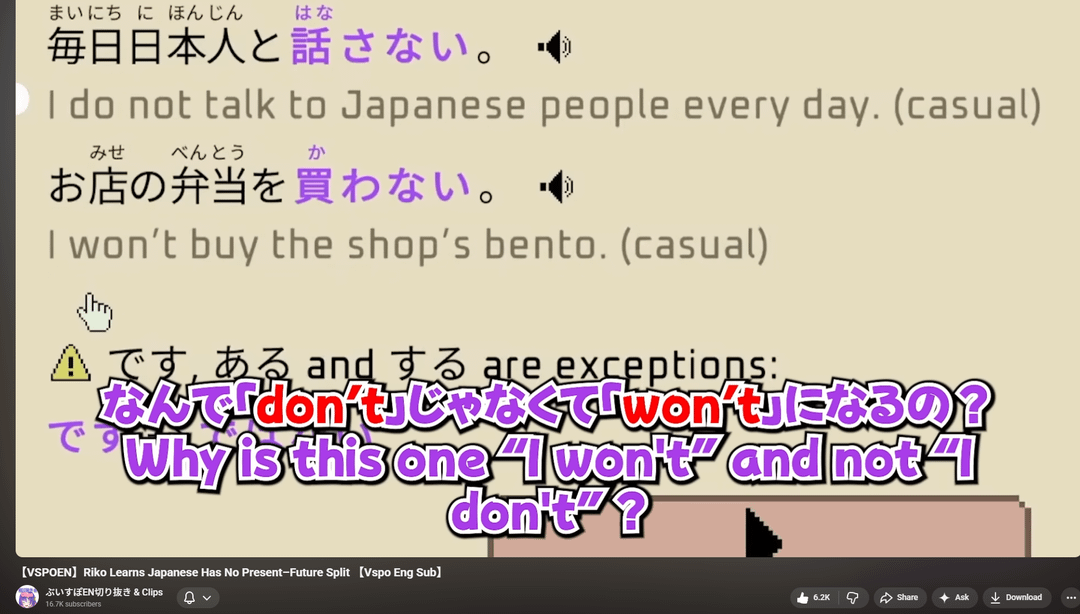
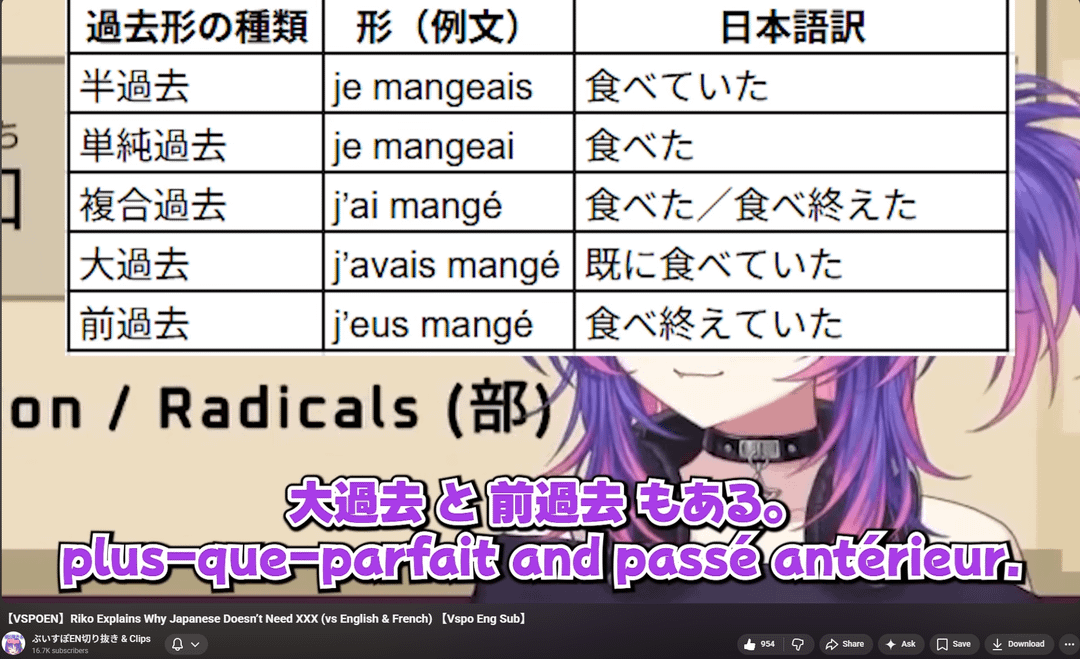
Okay:
So there is a clip of Riko Solari , a Youtuber / livestreamer from the English branch of the Virtual Esports Project (ぶいすぽっ! EN) featuring her doing her Japanese language studies using WAGOTABI.
Clip source:
【VSPOEN】Riko Learns Japanese Has No Present–Future Split 【Vspo Eng Sub】
Original stream:
【WAGOTABI】日本語を勉強する時間だ!!#3【#VSPOEN #RikoSolari】
While going through the lessons for NAI-FORM (ない形) , she became puzzled and word why "hanasanai" = do not talk BUT "kawanai" = will not buy
And then she was told by a viewer that in the Japanese language, present tense and future tense are considered as the same tense.
And that is where she was confused.
———————————————
So I was wondering:
If the Japanese language doesn't separate between present tense and future tense, then how do Japanese perceive time?
Do they perceive time differently than say an English language native? (or someone that is from a language that has Past, Present and Future tense)
I remember someone at r/linguistics state that our first language / native language influences how our brains perceive the world.
Could it be the same case here?
by blackcyborg009