
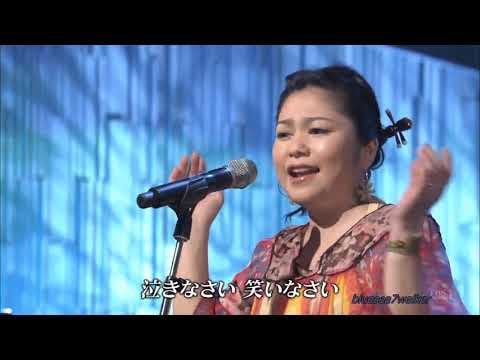
This may not be the right place to post this, but maybe y’all can help me find some info.
I decided to choose a Japanese song, すべての人の心に花を (flowers for your heart, I hope I got the right kanji for that), to sing for my voice lessons. However, my professor brought up that the singer had a high larynx position while singing, which is not what she wants to teach me as it can be damaging to the voice. But then she said she wasn’t sure if it is a cultural thing or if it was just the singer who was doing it. We want to do in a “western style” (no high larynx), be we also don’t want to diminish the culture that this song is from.
So, I guess what I’m asking is this;
Is a high larynx position in Japanese songs something that they do, or was it just this specific singer doing it because she wanted to?
Here’s the link to the song:
(Even if you have no idea what the hell I’m talking about, you should listen to the song. It’s really pretty.)
1 comment
One relevant bit of cultural context is that this is an Okinawan folk song—Okinawa has its own musical traditions which are distinct from mainland Japan, and a lot of the singing you hear from Rimi Natsukawa is characteristic of Okinawan folk music. The song was written by Shokichi Kina, who is a very important figure in modern Okinawan music. If you’re curious, you can listen to Kina’s original recording of “Subete No Hito No Kokoro Ni Hanna O” from 1980 here: https://www.youtube.com/watch?v=vgEAwKLmgEA
The high larynx position is prevalent in this style of music. However, the most distinctive feature of Okinawan folk singing is the slow vibrato you can hear on certain notes, which is called kobushi. Folk music from mainland Japan uses kobushi as well, but it sounds a bit different.
On the other hand, Shokichi Kina is famous for [adding elements of punk and new wave to Okinawan music](https://www.youtube.com/watch?v=dfScQdHrELU) and for including electric guitars, synthesizers, and drum machines alongside traditional Okinawan singing and instrumentation, so he’s not exactly a cultural purist himself. I don’t think you necessarily need to aim for complete cultural authenticity to be able to sing the song.