
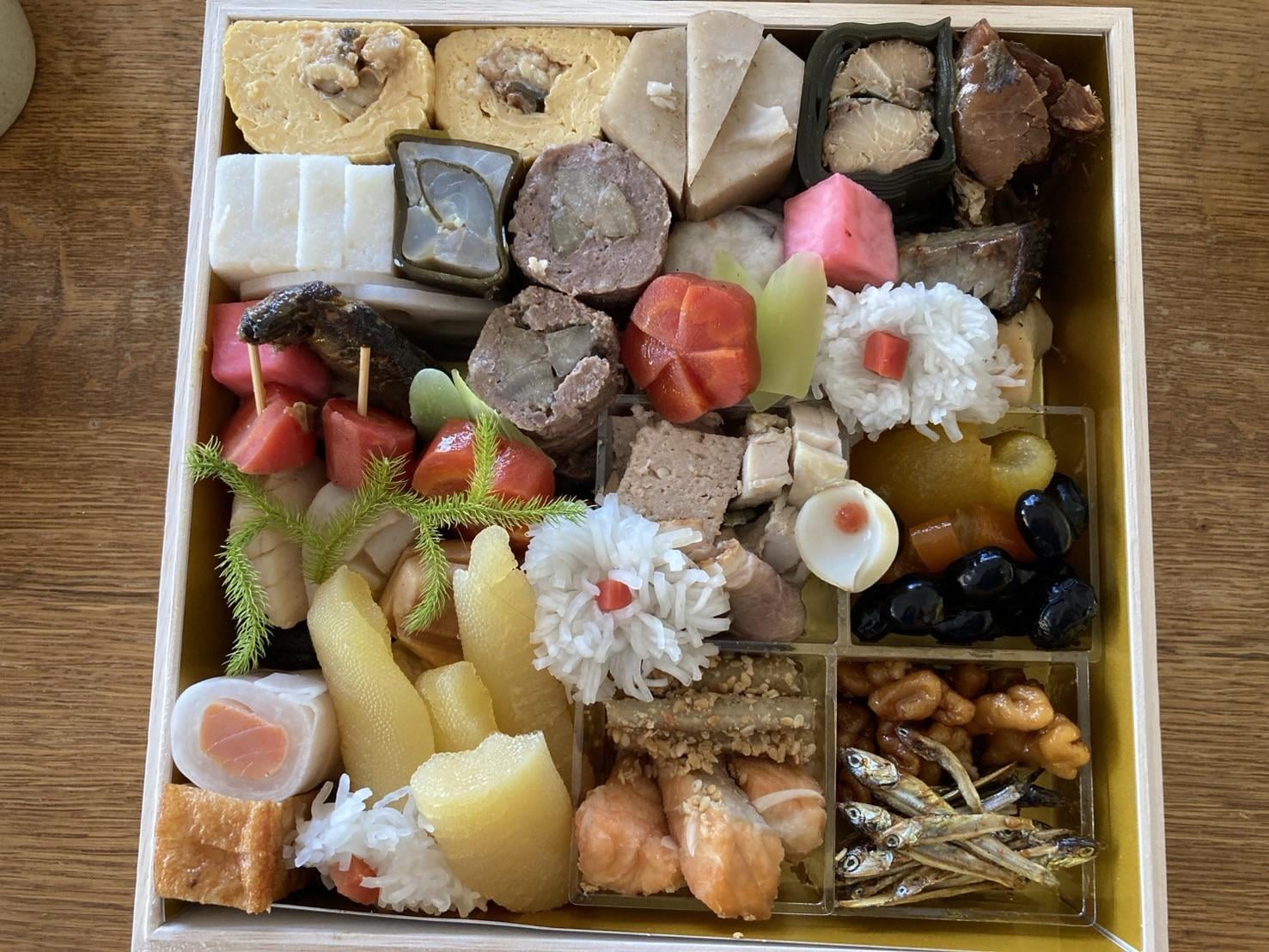
This is the osechi meal I’ve been eating every New Year in Japan for the past few years.
During the first three days of the New Year, many restaurants are closed, and traditionally people try not to cook much or use fire too often. Part of the idea is practical—osechi is made of foods that keep well and can be eaten right away—but it also has a cultural meaning. New Year is meant to feel different from ordinary life: a quiet, special time when even the people who usually do the cooking can rest.
What makes osechi interesting to me is that many of the foods are symbolic. For example, black soybeans represent health and diligence, herring roe symbolizes having many descendants, and sweet rolled omelet is associated with learning and knowledge. So it’s not just holiday food—it’s a box full of wishes for the coming year.
The downside is that it keeps getting more expensive because of inflation. This one now costs around 20,000 yen.
Do you have any New Year foods in your country that are symbolic like this?
by EarNo6260